Roseville Child Custody Lawyer


Call Us Today530-285-4844
Roseville Child Custody Attorney, Sara S. Thompson – Without a doubt, this is the primary focus and concern of the majority of people going through a dissolution or paternity action. The love that a parent has for their child(ren) is unmatched by anything else.
The physical location of children’s living arrangements in the US has changed over time, according to recent statistics from the U.S. Census Bureau, which is directly related to child custody debates. Approximately 70% of children under the age of 18 lived with two parents in 2020, although the percentage who lived with just their mother had increased since 1968.
The number of children living with their father alone more than doubled between 1968 and 2020. These patterns highlight why custody agreements continue to be a major concern in many family court disputes and reflect evolving family configurations.
There are two ways you can obtain a custody and visitation order. 1) file a motion with the court; or 2) draft an agreement, signed by all parties and the court. When the court is making orders regarding child custody and visitation, they look at what is in the best interest of the child. There are two types of custody orders.
The parent who has the child less than half of the time typically has visitation with the child(ren). There are many different types of visitation.
Visitation Schedule: Typically, it is advised to have a visitation schedule that the parties follow. Not every case has the same schedule, and the focus is on developing a schedule that is in the best interest of the child(ren).
Reasonable Visitation: Some cases can have “reasonable visitation”. In these cases, there is no set schedule that the parties follow, but rather, the parties work out the visitation time between each other.
Supervised Visitation: Under some circumstances, the court could order supervised visitation with the supervision done by the party, a neutral third person, or an agency.
No Visitation: If in the child’s best interest, the court could order no visitation.
When child custody and visitation is before the court, typically the parties attend mediation. The mediator can help the parents come up with a custody and visitation agreement. If you and the other parent are unable to come to an agreement and if your case is in a “recommending county,” the mediator can make a recommendation to the court on what they believe is in the best interest of the child(ren).
When deciding child custody issues in Roseville, California, judges follow child custody laws and must base their decisions on the best interests of the child. The factors judges consider when applying the best interests standard are specific, child-centric issues listed in California Family Code sections 3011 and Code 3020. Courts consider many factors on a case-by-case basis, but some of the most common factors include:
In general, parents should know that a family law judge does not use custody and visitation as a means to reward or punish them. The sole concern is what is in the best interest of the child.
The Roseville child custody process is fairly predictable. Knowing what to expect may help relieve some of the stress associated with litigating your case. To begin, a parent must have an open family law case or file a new case. Typically, custody and visitation orders are issued as part of a divorce, legal separation, paternity, or post-judgment case.
The parent who wants the judge to make custody and visitation orders can file a Request for Order. The parent then attaches a written declaration to the request and may attach other necessary documents.
For Roseville families, custody matters are heard in Placer County Superior Court – Roseville Branch at 10820 Justice Center Drive, Roseville, California 95678.
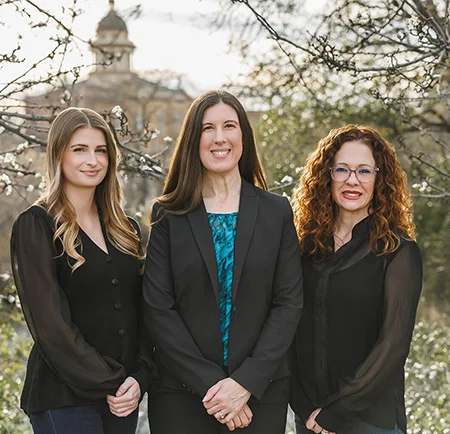
Do you need assistance with initial orders or a modification to an existing child custody and visitation order? If so, you should hire a child custody attorney right away. To discuss your circumstances with a compassionate and caring Roseville child custody attorney, contact the Law Office of Sara S. Thompson, PC. ROSEVILLE CHILD CUSTODY ATTORNEY, Sara S. Thompson –916-900-8775
Fields Marked With An * Are Required
E-mailing the Law Office of Sara S. Thompson, PC does not create an attorney-client relationship. Any sensitive or confidential information should not be sent through this email.
"*" indicates required fields

11601 Blocker Drive, Suite 100
Auburn, CA 95603Get Directions
Phone Number530-285-4844
The materials included in this website are provided for informational purposes only. Such materials are not intended as, nor do they constitute legal advice, and information is current only as of the date indicated. Transmission of information to and/or from this site is not intended to create a relationship between the sender and receiver and users of this website should not act or rely on information contained herein without seeking professional legal counsel. No attorney-client relationship is created by this website, nor by any exchange of information in connection therewith, unless and until a written agreement containing all terms of representation has been signed.
© 2026 Law Office of Sara S. Thompson, PC. All Rights Reserved. Disclaimer | Site Map | Privacy Policy. Digital Marketing By: 
*Images are obtained under license from Canva and other third-party stock image providers, with attribution included where required.